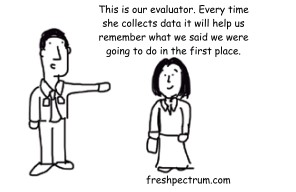
Leia o texto para responder à questão.
Assessment is perhaps one of the least understood areas
of language teaching and learning. Students may see tests as
a threat to their competence because they are afraid they will
not perform well. Teachers often do not like to construct tests
and are not altogether satisfied with the results when they do.
A more constructive view of language testing exists when
(a) testing is undertood as an opportunity for interaction
between teacher and student; (b) students are judged on the
basis of the knowledge they have; (c) the criteria for success
on the test are clear to students; (d) students receive a grade
for their performance on a set of tests representing different
testing methods (not just one!); (e) the tests are intended to
help students improve their skills; (f) the results are discussed.
The seminal efforts by Canalle e Swain (1980) to
operationalize Hymes’ (1972) communicative competence
have provided a relevant set of criteria for describing tests.
Tests should be seen as tapping one or more of the four
components making up the construct of communicative
competence: grammatical, discourse, sociolinguistic and
strategic competence.
(Andrew D.Cohen. Second language Assessment. IN: Marianne
Cerce-Murcia(ed). Teaching English as a second or foreign language.
Boston, Massachusstes: Heinle&Heinle. 2nd edition. 2001. Adaptado)