Questões de Concurso
Filtrar
11.181 Questões de concurso encontradas
Página 840 de 2.237
Questões por página:
Questões por página:
mostrar texto associado
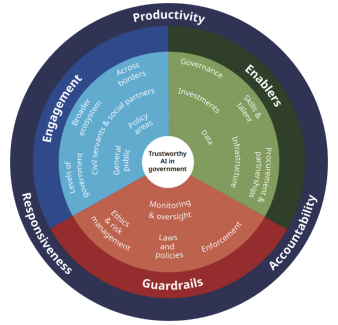
A frase “If engagement is shallow, solutions may look efficient
but feel unfair, and trust can fall”, no último parágrafo, sugere
que a principal consequência de um engajamento fraco é
The relationship between English and Portuguese
includes "false friends" and words with similar sounds but
different meanings, which can lead to comprehension
errors. Concerning these linguistic traps, mark the
CORRECT alternative.
Modal verbs are a special group of auxiliary verbs that
express functions like ability, permission, obligation, and
possibility. Regarding this topic, mark T (True) or F
(False) for each statement:
(__)Modal verbs are always followed by the base form of the main verb (without "to"), and they do not change their form according to the subject.
(__)The modal verb "must" can be used to express a strong obligation or a logical deduction based on certain evidence in the present.
(__)"Should" is the most appropriate modal verb to ask for a formal permission in a professional environment, replacing the use of "can" or "may."
(__)The negative form of "can" in the past tense is "could not" or "couldn't," which can indicate both a lack of ability or a lack of permission in the past.
After analyzing the statements, choose the alternative that presents the CORRECT sequence, from top to bottom:
Verb tenses in English indicate not only the time of an
action but also its aspect, showing whether it is a
completed fact or a continuous process. Analyze the
following statements:
I.The Present Perfect is used to describe actions that happened at an unspecified time in the past or that have a connection with the present moment.
II.The Future with "going to" is typically used for spontaneous decisions made at the exact moment of speaking, without any prior plan or evidence.
III.The Past Continuous is used to describe an action that was in progress at a specific time in the past, often interrupted by another event.
Choose the alternative that presents the CORRECT statement(s):
The development of language competencies assumes
the integration of the four basic skills (listening, speaking,
reading, and writing) in meaningful contexts of language
use. Analyze the following statements:
I.The development of critical reading skills involves the student's ability to identify biases, the author's intentions, and the socio-historical context of the text.
II. Written production should be approached as a process-oriented activity, involving stages such as planning, drafting, revising, and rewriting according to the proposed text genre.
III. Listening is a passive process of phonetic decoding that does not require the use of prior knowledge or inferencing by the learner.
Choose the alternative that presents the CORRECT statement(s):
